
If your garage door survived hurricane season without a complaint, assume nothing—the cooler, drier months that follow are exactly when salt-air rust, swollen panels, and worn hardware finally show themselves. The exceptions: doors that took on wind or water during a storm, torsion springs that are already a few years old, openers that strained in the summer humidity, or brand-new installs still under warranty. Those need a closer look now, not a once-over.
Why "Winter" Still Matters on the Gulf Coast
Crystal Beach doesn't get the hard freezes that make garages elsewhere a different animal, but the shift from hot, soggy summer air to cooler, drier conditions does real things to a garage door. Wood and wood-composite panels that absorbed moisture all summer start to shrink back down, which can loosen hardware or reveal gaps that weren't there in July. Lower humidity also makes surface rust easier to spot, since the salt residue that built up near the coast is no longer hidden under a film of condensation. And with temperatures dropping into the 40s and 50s on some mornings, steel springs and tracks contract slightly—enough to turn a marginally worn spring into one that finally gives out.
Start With a Rust and Corrosion Check
Walk the full track, hinges, springs, and bottom bracket with a flashlight. Salt air works on metal even if you're not right on the water, and small orange spots on fasteners or spring coils are the first sign. Look specifically at:
- Bottom corner brackets and hinges, where water tends to pool after afternoon downpours
- Spring coils, especially near the stationary cone
- Exposed screws and bolts on the track and opener rail
Light surface rust can be wiped down and treated with a corrosion inhibitor. Pitting or flaking metal on a spring or bracket is a different matter—that's a part to replace, not clean.
Weatherstripping and Seals
After months of humidity and sudden storms, the rubber seal along the bottom of the door and the weatherstripping around the frame take a beating. Check for cracking, flattening, or gaps where daylight shows through. A failed seal doesn't just let in drafts—it lets in wind-driven rain during the next round of storms and gives pests an easy way in during the cooler months when they're looking for shelter. Replacing a bottom seal is inexpensive and usually a same-day fix.
Lubrication, Done Right
Summer humidity plus dust creates a gritty buildup on rollers, hinges, and the spring itself. Before you add fresh lubricant, wipe the old grime off with a dry cloth. Use a silicone-based or garage-door-specific lubricant rather than household oil or WD-40, which attracts dust rather than repelling it. Focus on:
- Roller stems and bearings
- Hinge pivot points
- The full length of the torsion spring
- The opener's chain or screw drive, if accessible
This single step prevents a lot of the squeaking and sticking that shows up as temperatures drop.
Balance and Spring Check
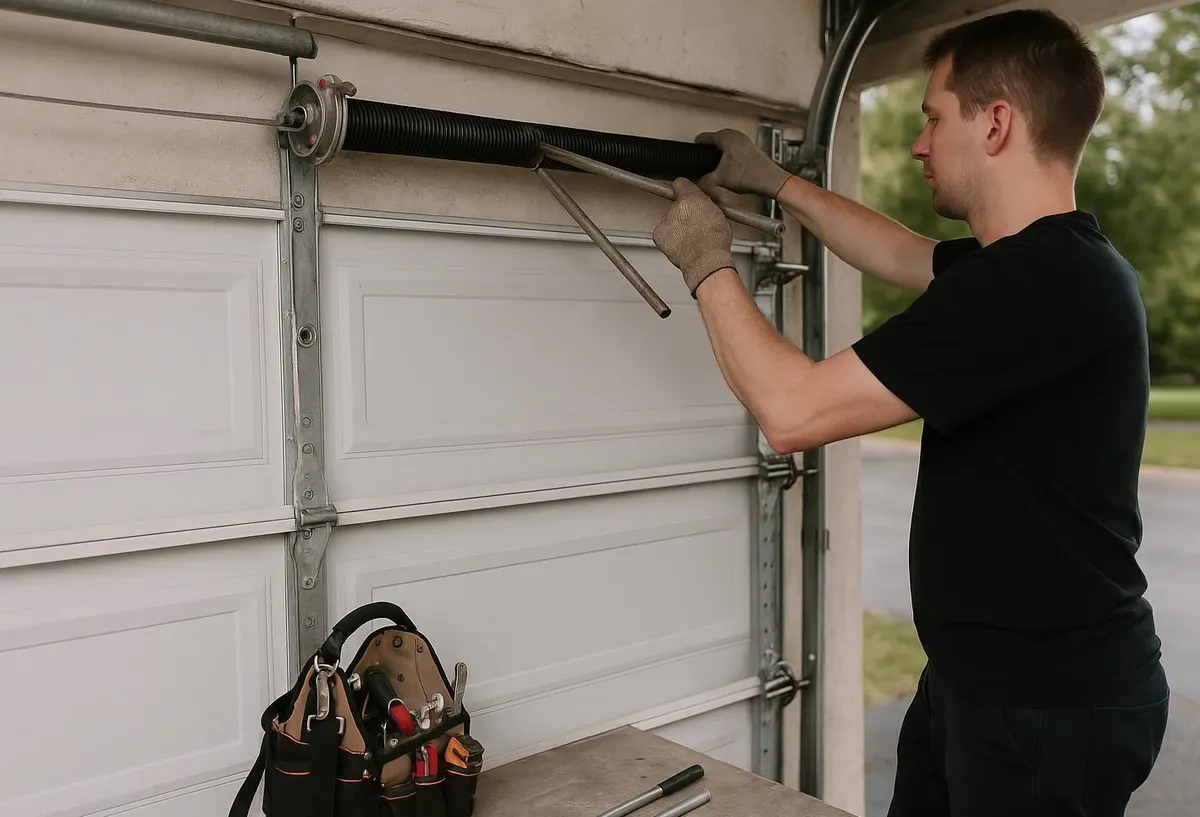
With the opener disconnected, lift the door halfway by hand. It should stay in place on its own. If it drifts up or crashes down, the spring tension is off—a problem that gets worse, not better, as the metal contracts in cooler weather. This isn't a DIY adjustment; torsion springs are under enough force to cause serious injury. If the balance is off, that's the time to have the spring tension reset or the spring replaced before it fails on its own schedule.
Opener and Safety Sensors
Storm season means the garage door gets used more—sheltering vehicles, moving items in and out ahead of weather. All that cycling, plus humidity inside the opener housing, can throw off sensor alignment or wear down the drive gear. Test the auto-reverse function by placing a block in the door's path, and wipe down the photo-eye sensors near the floor, since pollen and salt haze build up on the lenses. If remotes are getting unreliable or the opener makes a new grinding noise, that's worth addressing before holiday guests are relying on it.
Hardware From Wind-Load-Rated Doors
If your door has reinforced struts or heavier-duty hardware for wind load, give those components the same rust and tightness check as the rest of the door. Storm-rated hardware still relies on standard fasteners and brackets, and a loose bolt on a reinforcement strut defeats the purpose of having it.
When to Call Precision Garage Door of Crystal Beach
A visual check catches a lot, but some things—spring tension, opener gear wear, track alignment—are easier and safer to diagnose with the right tools. If you noticed rust on moving parts, a door that doesn't balance properly, or an opener that's acting up, it's time to call in a technician rather than guess. Our Garage Door Maintenance & Tune-Up service covers a full inspection, lubrication, and adjustment of springs, cables, rollers, and the opener, so small issues get caught before they turn into a dead spring or a door off its track in January. If a spring has already failed or you're hearing grinding from worn rollers, our Garage Door Spring Repair and Cable & Roller Replacement services get it handled safely and correctly the first time.
If your garage door needs attention before the season settles in, call Precision Garage Door of Crystal Beach, FL—we'll diagnose it honestly and get it done right.